
Production Only
Printing, cutting, fabrication, painting, finishing, assembly, labeling, and packaging begin with an approved production specification.
Production-planning guide for a proposed Redmond project—not evidence of a branch or local project.
Prepare Redmond inputs after checking RZC 21.44, sign category, window context, and any business-license prerequisite.
Production and fabrication only. The customer or qualified project team confirms field dimensions, site conditions, approvals, mounting, access, and installation.
Printing, cutting, fabrication, painting, finishing, assembly, labeling, and packaging begin with an approved production specification.
The customer or qualified project team verifies the parcel, governing authority, property rules, permits, and any professional review before release.
Finished components can be labeled and packaged to the approved schedule; field measurements, mounting, access, and installation remain outside shop scope.
Panels and graphics made from approved dimensions and copy.
Graphics and masks prepared from approved files.
Banners finished to the confirmed display specification.
Seattle Sign Squad does not perform site surveys, field measurements, permit handling, code review, engineering, electrical work, mounting design, installation labor, or installer scheduling.
The customer or qualified project team must resolve those items and provide the final approved inputs used for production. Start with the artwork setup guide and installer-ready handoff requirements.
Address to approved specification
Redmond directs sign proposals to RZC 21.44, distinguishes wall signs from signs behind windows, and lists a business-license prerequisite. A useful production request identifies which physical condition applies before artwork is sized. A graphic applied to glass, a display positioned behind glass, and a sign mounted to the building can use different materials and details even when the visible message is similar. The customer or project team should also resolve the listed prerequisite; the shop does not obtain a business license.
For fabrication, show the glass, wall, or supporting surface as measured by the customer or installer. Add the approved visible area, sign dimensions, copy, colors, opacity, viewing direction, material, finish, and attachment or application method. If the project combines storefront letters with window graphics or an interior mural, keep each system on its own detail sheet while using a shared revision log. That makes it possible to revise one category without unintentionally changing every related file.
Provide the confirmed wall-sign category, approved envelope, dimensioned facade relationship, construction depth, material, finish, and final copy. Installer-supplied hole patterns, rails, raceways, spacers, or backing details should be part of the production set when they affect cutting or assembly.
State whether the graphic is applied to the interior or exterior glass surface, suspended behind glass, or otherwise separate from a wall sign. Verify each lite, mullions, sight lines, viewing side, opacity, white-ink or laminate needs, and the approved coverage before preparing print panels.
For murals, banners, or promotional graphics, provide verified surface or display dimensions, panel order, overlaps or seams, edge finishing, duration information established by the project team, and the third-party application plan. Keep temporary-display hardware and access decisions outside the print specification unless explicitly supplied.
Drawing and handoff coordination
A Redmond drawing set should name the confirmed wall, applied-to-window, or behind-window condition on every relevant sheet. Use a numbered glass elevation for window work and a separate facade elevation for building-mounted components. This keeps opacity, viewing direction, adhesive surface, edge clearance, and coverage decisions from being mixed with wall-sign construction. Record the business-license prerequisite as a project-team responsibility and note its status in the release log without making it part of the shop's service scope.
Before printing window or wall graphics, review a reduced panel map and at least one full-scale critical detail. Confirm seams, overlaps, cut paths, white layers, laminate, orientation, and how artwork crosses mullions, doors, or corners. Give each panel a sequence number that matches both the elevation and the package label. For dimensional or rigid components on the same project, use distinct sign IDs and boxes so the installer can separate application media from hardware-dependent pieces at handoff.
Record the final dimensions, copy, artwork revision, material, finish, construction, quantities, and every qualified field interface that affects production.
Check scale, critical details, seams, edges, patterns, component breakdown, color references, and labels—not only a reduced visual proof.
Match piece marks, protective layers, patterns, loose components, and packing groups to the approved sign IDs and third-party installer sequence.
Before approving production, use this city-specific list alongside the current official source and the project team's final field information.
Official local context
Redmond directs proposals to RZC 21.44, distinguishes wall signs from signs behind windows, and lists a business-license prerequisite.
The project team should establish the category and prerequisites before approving the proof. The shop does not interpret the code or obtain a license or permit.
Production gate: Confirm RZC 21.44, the sign category, window or wall context, and any current business-license prerequisite before production.
Supports: RZC 21.44 governs sign proposals; the City distinguishes wall signs and signs behind windows and lists a business-license prerequisite.
Checked:
Materials and finished details
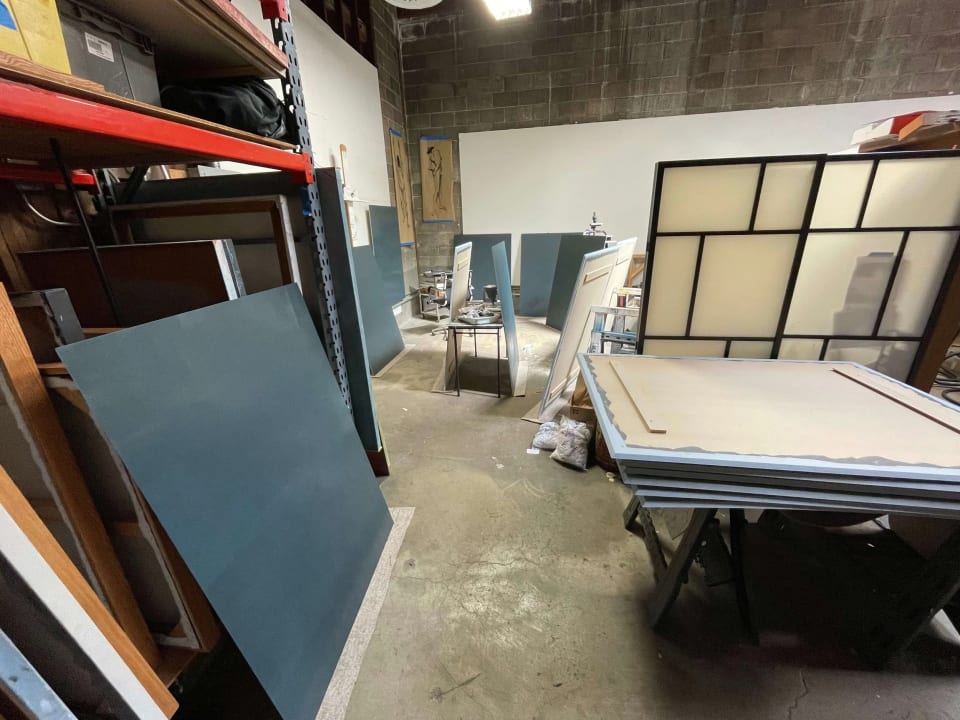
Use these sign and process details to discuss material, finish, legibility, and handoff requirements. The images illustrate production capabilities; they are not city-location claims.

The current City information treats those categories separately, and the production methods can also differ. The brief should state the confirmed category and whether material is mounted to the building, applied to glass, or displayed behind it so dimensions, opacity, viewing direction, and attachment are specified correctly.
No. The responsible business or project team should confirm and satisfy any current prerequisite. Production can use the approved sign category, dimensions, artwork, and construction inputs that result, but the shop does not obtain a business license or permit.
Provide verified width and height for every glass lite, mullion widths, obstructions, viewing side, interior or exterior application, desired edge clearances, and any approved coverage limit. A numbered elevation should map each artwork panel to the correct lite and orientation.
No. This is a production-market guide for orders connected with Redmond; it does not claim a branch, staffed office, local crew, pickup point, delivery route, or field-service location.
Send the approved product, quantity, final dimensions, artwork, material, finish, exposure, packaging, and installer-handoff requirements.
Production only. The customer or qualified project team handles field verification, governing approvals, code compliance, engineering, access, mounting, and installation.